In today’s fast-paced world, noise pollution has become a common problem in residential and commercial environments. Whether it’s traffic, construction, loud neighbors, or city activity, unwanted noise can disturb comfort, productivity, and overall well-being. One effective solution that modern architecture offers is aluminum windows. Known for their strength, durability, and sleek appearance, aluminum windows also provide excellent noise reduction benefits of aluminum windows, especially when designed with double glazing, laminated glass, and proper sealing.
The noise reduction benefits of aluminum windows make them an ideal choice for homes, offices, and buildings located in busy or noisy areas. Their strong frames, airtight sealing, and compatibility with advanced glazing systems help block external noise and create quieter, more peaceful indoor environments. This article explores how aluminum windows reduce noise, their key features, and why they are a smart investment for improving comfort and sound insulation.
Understanding Noise Pollution in Buildings
Noise pollution refers to unwanted or excessive sound that disrupts daily life. In homes, noise can affect sleep quality, concentration, and relaxation. In offices, it can reduce productivity and increase stress levels. Sound travels through gaps, thin materials, and poorly insulated windows. Since windows are among the weakest points in sound insulation, choosing the right window material and design is essential.
Modern aluminum windows are engineered with advanced sealing systems and glazing options that significantly reduce sound transmission.
How Aluminum Windows Reduce Noise
Aluminum windows reduce noise through a combination of structural strength, tight sealing, and advanced glass options. Here are the main ways they improve sound insulation:
1. Strong and Rigid Frame Structure
Aluminum is a strong and rigid material compared to traditional materials. This rigidity prevents vibrations caused by sound waves. When frames vibrate less, less sound passes through them. Strong frames also support thicker and double-glazed glass, which improves noise reduction.
Unlike weaker materials that may bend or loosen over time, aluminum maintains its shape and performance for many years.
2. Double Glazing and Triple Glazing Compatibility
One of the biggest advantages of aluminum windows is their compatibility with double- and triple-glazing. Double-glazed windows consist of two glass panes separated by an air or gas-filled gap. This gap acts as a barrier, reducing sound transmission.
Triple glazing adds another layer of protection and is even more effective in noisy environments such as near highways, airports, or busy urban areas.
These glazing options can reduce external noise by 30–50%, depending on glass thickness and installation quality.
3. Airtight Sealing Systems
Modern aluminum windows are designed with high-quality rubber gaskets and sealing systems. These seals close all gaps between the frame and glass, preventing sound from entering through small openings.
Poor sealing is one of the main reasons noise enters buildings. Aluminum window systems are engineered for precise fit, ensuring airtight sealing and improved sound insulation.
4. Use of Laminated Glass
Aluminum windows can also support laminated glass, which contains a special sound-absorbing layer between glass panes. This layer reduces sound vibrations and blocks noise more effectively than regular glass.
Laminated glass is especially useful in:
- Homes near busy roads
- Apartments in urban areas
- Offices in commercial zones
- Buildings near airports or railways
This combination of aluminum frames and laminated glass creates a powerful noise barrier.
Additional Features That Improve Noise Reduction
Beyond frame strength and glazing, aluminum windows offer several features that enhance sound insulation:
Multi-Point Locking Systems
These locking systems press the window tightly against the frame, eliminating gaps and reducing sound leakage.
Precision Engineering
Aluminum windows are manufactured with high accuracy, ensuring perfect fitting and minimal air gaps.
Weather Stripping
Advanced weather stripping prevents both air and sound from entering the building.
Thermal Break Technology
Thermal breaks not only improve energy efficiency but also reduce sound transmission by interrupting vibration paths.

Benefits of Noise Reduction for Homeowners
Installing aluminum windows with sound-insulating features offers several important benefits:
Improved Sleep Quality
Reduced outside noise creates a peaceful sleeping environment, improving overall health and well-being.
Better Comfort and Relaxation
A quieter home allows residents to relax without constant disturbance from traffic or external activity.
Increased Property Value
Homes with soundproofing features are more attractive to buyers and have higher market value.
Enhanced Privacy
Noise reduction works both ways. It prevents outside noise from entering and also prevents inside conversations from being heard outside.
Benefits for Offices and Commercial Spaces
Noise reduction is equally important in commercial environments. Aluminum windows provide several advantages:
Increased Productivity
Employees work more efficiently in quieter, distraction-free environments.
Professional Atmosphere
A noise-free office creates a more professional and comfortable experience for clients and staff.
Better Concentration
Reduced noise improves focus, especially in offices, meeting rooms, and workspaces.
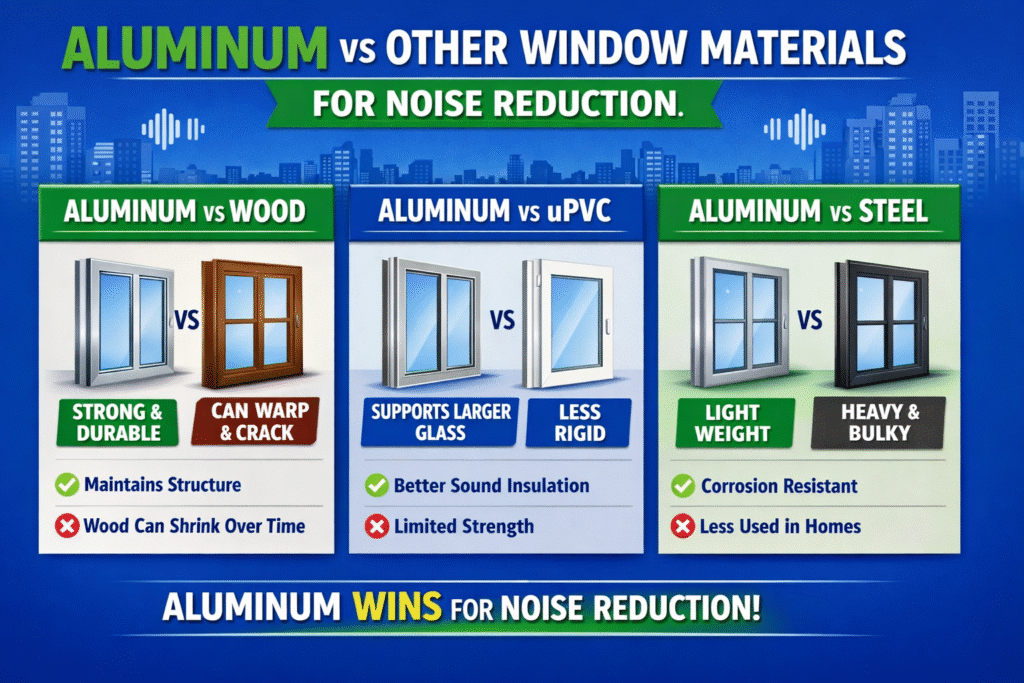
Aluminum vs Other Window Materials for Noise Reduction
Aluminum windows compare favorably with other materials for noise insulation.
Aluminum vs Wooden Windows
Wood provides decent insulation but can warp, crack, or shrink over time, creating gaps that let noise in. Aluminum maintains its structure and sealing performance longer.
Aluminum vs uPVC Windows
uPVC also offers good insulation, but aluminum frames are stronger and can support larger, thicker glass panels, thereby improving soundproofing performance.
Aluminum vs Steel Windows
Steel is strong but heavier, and it is less commonly used in residential buildings. Aluminum offers a better balance of strength, weight, and sound insulation.
Importance of Professional Installation
Even the best aluminum windows cannot provide proper noise reduction without correct installation. Professional installation ensures:
- Proper sealing
- Accurate fitting
- No air gaps
- Maximum sound insulation performance
Poor installation can reduce the effectiveness of even high-quality windows.
Long-Term Performance and Durability
Aluminum windows offer long-term noise reduction benefits because they are:
- Rust-resistant
- Weather-resistant
- Durable
- Low maintenance
Unlike other materials, aluminum does not expand, crack, or weaken easily. This ensures consistent sound insulation for many years.
Ideal Applications for Aluminum Noise-Reducing Windows
Aluminum windows are ideal for:
- Homes near busy roads
- Apartments in cities
- Office buildings
- Hospitals
- Schools
- Hotels
- Commercial buildings
They create quieter and more comfortable indoor environments.
Conclusion
Noise pollution is a growing concern in modern living, but aluminum windows offer an effective and reliable solution. Their strong frames, airtight sealing, and compatibility with double- or triple-glazing significantly reduce external noise. When combined with laminated glass and professional installation, aluminum windows can transform noisy environments into peaceful and comfortable spaces.
In addition to noise reduction, aluminum windows offer durability, modern aesthetics, and low maintenance, making them a smart long-term investment for both residential and commercial properties. Choosing high-quality aluminum windows ensures improved comfort, privacy, and overall quality of life.